AI & Technology · August 28, 2026
Losing Money Is Normal in SaaS: Makarove Hong on 40+ Products, Two-Week MVPs, and Why Decomposition Beats Execution
Losing Money Is Normal in SaaS: Makarove Hong on 40+ Products, Two-Week MVPs, and Why Decomposition Beats Execution
He ships an MVP in two weeks. He has built more than forty products, and over half of them lost money. He does not describe that as failure — he describes it as the normal ecology of SaaS.
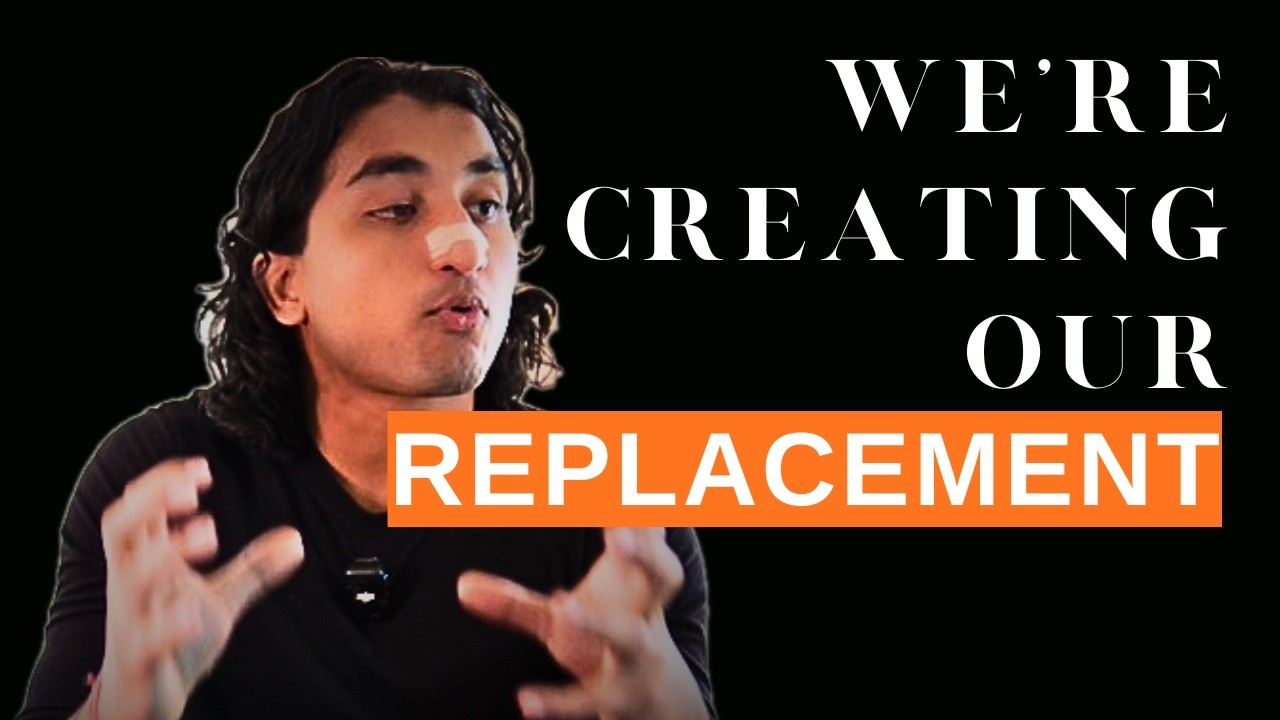
Makarove Hong (洪璿岳) is the founder and CEO of FlyiDEA (心電感應科技), a Taiwanese company that builds no-code and AI products on a two-week delivery cycle, acts as an outsourced CTO for small and mid-sized businesses, and takes a share of the product's margin instead of charging a maintenance fee. There is no fundraising and no IPO clock. In this episode of Still Human, the biweekly podcast from Oshen Studio, Makarove and host Perkin Yang talk about what an AI-run working day actually looks like, why the hard part of the AI era is taking a problem apart rather than doing the work, and what a NT$3,000 internship stipend cost him at nineteen.
Key Themes Covered in This Episode
- What an AI-assisted day looks like from the second the alarm goes off
- Reading Product Hunt daily and handing it to an AI that takes products apart
- The two-week MVP: how much of day one through day fourteen he still builds by hand
- RiiCH, taking profit share instead of maintenance fees, and losing money on over half of forty-plus products
- The project that ran two years, never launched, and never earned a dollar
- Why the bottleneck in the AI era is decomposition, not execution
- Night shifts at Taipei 101 on three hours of sleep, and what he calls the activation phase
- Culture over salary: ability, willingness, and emotional connection
An AI-Run Working Day
The conversation opens on something concrete rather than theoretical: where AI actually sits inside Makarove's day. It shows up in the first second the alarm goes off, and it keeps working in places most people would not think to put it — including agents that watch multiple LINE groups for messages that carry risk, so that the signal surfaces without him reading every thread.
Product Hunt, Every Day, Fed to a Machine
He reads Product Hunt daily. The interesting part is not the reading; it is what happens next. The products go to an AI that pulls them apart — structure, positioning, what the thing is actually doing underneath the landing page. It is a habit of teardown rather than consumption, and it feeds directly into how quickly his team can rebuild an idea.
The Two-Week MVP, and What He Still Touches
FlyiDEA delivers an MVP in two weeks. Makarove walks through the fourteen days honestly: which parts are no-code, which parts are AI, and how much he still builds by hand between day one and day fourteen. The answer is less flattering to the tooling than the pitch usually is, and more useful.
RiiCH, Profit Share, and Losing Money on Half of Everything
FlyiDEA takes a share of margin rather than a maintenance fee — a model that ties the company's outcome to whether the product actually works. Makarove is blunt about the arithmetic: across more than forty products, over half lost money. RiiCH is one of the products in that portfolio. His position is that this distribution is not a sign of doing it wrong; it is what the SaaS ecology looks like from the inside, and pretending otherwise is how founders misread their own numbers.
Two Years, No Launch, No Revenue
The counterweight to the two-week story is a project that ran for two years, never went live, and never earned a dollar. He tells it without softening it. It is the clearest illustration in the episode of what happens when the decomposition is wrong at the start.
Decomposition Is the Bottleneck
This is the argument at the center of the episode. Execution has gotten cheap — models write the code, no-code covers the scaffolding, and a two-week MVP is possible because of it. What has not gotten cheap is knowing how to cut a problem into the right pieces before any of that starts. Makarove's claim is that the scarce skill in the AI era is decomposition, and that most teams are still optimizing the part that stopped being hard.
Growth Happens at the Limit
A shift in register: he argues that growth does not happen in loss, it happens at the limit — and that when what is behind you is frightening enough, moving forward stops being a decision. It is the frame he uses to explain the next part.
Taipei 101, Three Hours of Sleep, and the Activation Phase
At university, an internship paid a NT$3,000 monthly stipend. He needed NT$11,000 to live — rent 4,000, food 6,000, gas 1,000 — so he took night shifts at Taipei 101 to cover the other NT$8,000, sleeping three hours a day. Two weeks in, he fell down the stairs. He does not tell the story as a grind anecdote or a warning; he calls that stretch the activation phase, and the episode sits with what that framing does and does not justify.
Culture Over Salary
On building a team, he puts culture above pay and breaks it into three things he looks for: ability, willingness, and emotional connection. He also describes treating himself as a black hole — absorbing pressure so it does not land on the people around him — which is either a leadership philosophy or a load-bearing wall, and the conversation does not fully resolve which.
Ten Minutes That Are Not Optimized
Asked for the most relaxed stretch of his week, the answer is not a system: walking home for an hour, looking at the moon. For someone who has automated the first second of his morning, it is the part of the week he has deliberately left alone.
Show Notes
Makarove Hong is the founder and CEO of FlyiDEA (心電感應科技), a Taiwanese company delivering no-code and AI MVPs in two weeks, working as an outsourced CTO for small and mid-sized businesses, and taking co-product revenue share instead of maintenance fees. He has shipped more than forty products; over half lost money. He is not raising and not chasing an IPO — the company's current focus is AI GO, a platform for helping small and mid-sized businesses move to AI. In this conversation he makes the case that execution is no longer the constraint, and that the founders who do well from here will be the ones who can take a problem apart.
Tools & Resources
- FlyiDEA (心電感應科技) — Two-week no-code + AI MVP delivery, outsourced CTO, co-product revenue share
- AI GO — The SMB AI transformation platform FlyiDEA is currently focused on
- RiiCH (人脈通) — One of the products in the portfolio, built on the profit-share model
- Product Hunt — Read daily, then handed to an AI for teardown — producthunt.com
Related Still Human Episodes
Founders on building, shipping, and what the work costs:
- Execution Culture: How a Student Founder Raised $2M and Built Robotics for the Real World — oshenstudio.com/episode/execution-culture-sean-wu-synphony-robotics
- Build Before You're Ready: Andrey Marey on High-Agency, Discipline, and Refusing to Use AI With Friends — oshenstudio.com/episode/high-agency-andrey-marey-student-founder
- Toby Corey: Zentrepreneurship, Tesla's Fake Solar Roof, and Building Trust in AI — oshenstudio.com/episode/zentrepreneurship-toby-corey-brandcapsule-ai-trust
- We Are the Product: Krish Jajoo on Social Media, Silicon Valley Pressure, and Why Human Connection Still Wins — oshenstudio.com/episode/ai-human-connection-krish-jajoo-ycombinator-effect
About Makarove Hong
Makarove Hong (洪璿岳) is the founder and CEO of FlyiDEA (心電感應科技). The company delivers no-code and AI MVPs on a two-week cycle, serves as an outsourced CTO for small and mid-sized businesses, and structures deals as co-product revenue share rather than maintenance contracts. He has built more than forty products and is candid that over half lost money. He works with SMBs on AI transformation without outside funding or an IPO timeline, and he is unusually direct about the parts of the founder story that are normally edited out — the two-year project that never shipped, the money that did not come back, and the stretch at nineteen when covering rent meant three hours of sleep a day.
Listen to the Full Episode
Listen to the full conversation on Spotify, Apple Podcasts, or YouTube. Or read the full transcript on Substack.
Connect With Makarove Hong
- LinkedIn: linkedin.com/in/rovehong
- Threads: @vehong
- Facebook (讓狂人飛): facebook.com/razyer
- Watch the episode: youtube.com/watch?v=Wld1F3rmGS4
Follow Still Human Podcast
Still Human is a biweekly podcast by Oshen Studio, hosted by Perkin — exploring what it means to stay human in the age of AI. Real conversations with builders, creators, founders, and thinkers doing it in real life. New episodes every two weeks on YouTube, Spotify, Substack, and LinkedIn.
- YouTube: youtube.com/@Oshen.studio
- Instagram: instagram.com/perkin0909
- Newsletter: perkin0909.substack.com
- Listen everywhere: Search Still Human Podcast on Spotify, Apple Podcasts, or wherever you listen
New episodes drop every two weeks. Subscribe so you never miss a conversation.
Frequently Asked
Why does Makarove Hong say losing money is normal in SaaS?
Across more than forty products, over half lost money. His argument is that this distribution is not evidence of doing it wrong — it is what the SaaS ecology looks like from the inside. FlyiDEA takes a share of margin rather than a maintenance fee, which ties the company’s outcome to whether a product actually works, and makes the losses visible instead of hiding them inside a retainer.
What does he mean by decomposition being harder than execution?
Execution has gotten cheap: models write the code, no-code covers the scaffolding, and a two-week MVP is possible because of it. What has not gotten cheap is knowing how to cut a problem into the right pieces before any of that starts. His claim is that decomposition is the scarce skill in the AI era, and that most teams are still optimizing the part that stopped being hard.
How does FlyiDEA deliver an MVP in two weeks?
A mix of no-code and AI, with FlyiDEA acting as an outsourced CTO for small and mid-sized businesses. In the episode Makarove walks through the fourteen days honestly — which parts the tooling handles and how much he still builds by hand between day one and day fourteen.