AI & Technology · August 3, 2026
Will AI Replace Doctors? Ewen Huang on Causal AI, CRISPR, and What Medicine Can't Automate
Will AI Replace Doctors? Ewen Huang on Causal AI, CRISPR, and What Medicine Can't Automate
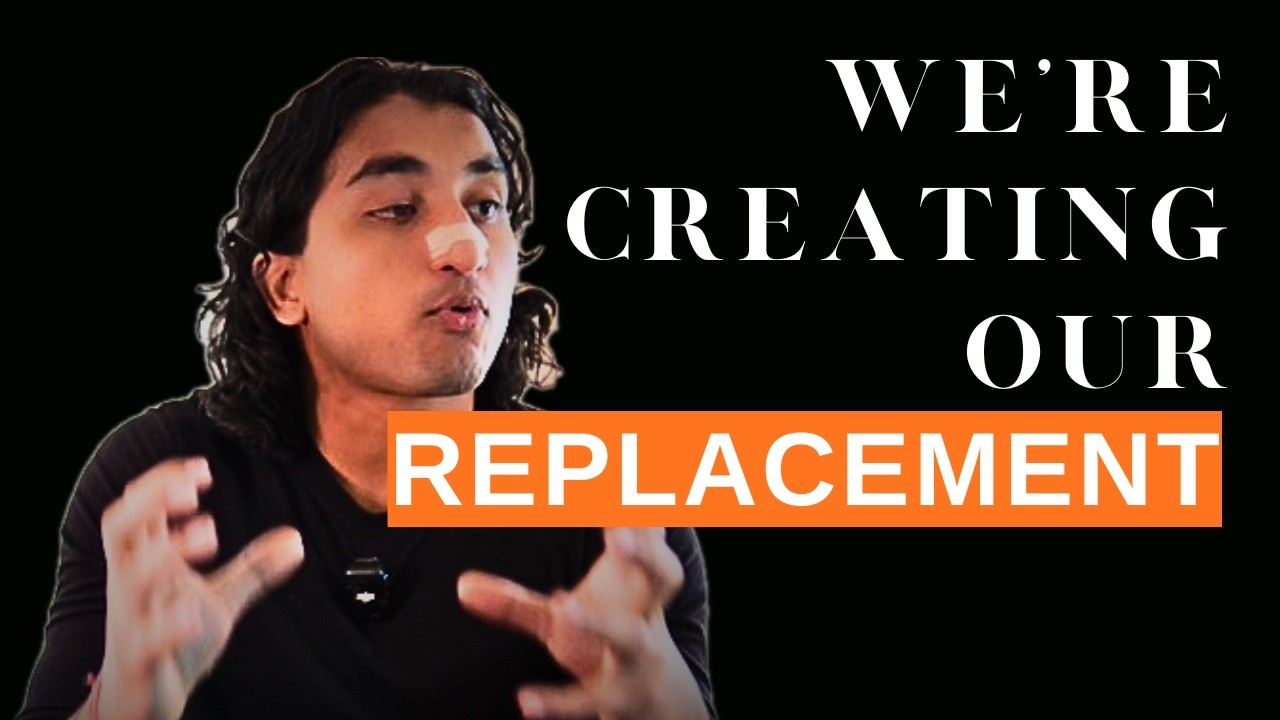
Ewen Shengyao Huang is an M.D. candidate at National Taiwan University who has analyzed autoimmune data from 97 million COVID patients, worked on CRISPR gene delivery for inherited blindness at Columbia, and co-built a FinTech platform — all before finishing medical school. In this episode of Still Human, the biweekly podcast from Oshen Studio, Ewen and host Perkin Yang talk about where AI genuinely accelerates learning medicine, and where it hits a wall the moment a real patient is in the room.
"Sometimes patients say A, but they actually mean B." The conversation moves from using AI as a memory palace, through causal inference in long COVID research, to a quiet story about a dying man's wife that taught him more than any textbook.
Key Themes Covered in This Episode
- Will AI replace doctors — and what Ewen thinks it will replace instead
- Using AI to build memory and understanding, not just to look things up
- "Targeted learning" and how causal AI answers why questions, not just predictive ones
- What 97 million COVID patient records can and cannot tell you
- CRISPR gene delivery for inherited blindness, and learning fast across domains
- The bedside skill no model has: hearing what a patient means, not what they say
AI as a Memory Palace, Not a Shortcut
Most conversations about students and AI assume the tool replaces the work. Ewen's use is the opposite: he treats AI as scaffolding for memory and understanding, building durable structure rather than outsourcing recall. The distinction matters more in medicine than almost anywhere else, where the cost of a hollow answer is measured in patients.
Causal AI and the Limits of 97 Million Patients
Ewen's autoimmune research drew on data from 97 million COVID patients — a scale that makes prediction easy and causation hard. He explains what "targeted learning" means in practice, and why moving from what correlates to what causes is the shift that determines whether AI can actually contribute to drug research.
CRISPR, FinTech, and Learning Across Domains
Gene delivery for inherited blindness at Columbia, then a FinTech platform, then clinical rotation. Ewen talks about what transfers between domains and what doesn't — and why the ability to learn fast is the only durable skill when the tools keep changing.
The Patient's Wife
The story Ewen keeps returning to isn't about technology. A dying man, his wife, and what she actually needed to hear. It is the clearest example in the conversation of the gap between information and care — and the reason he doesn't believe the job disappears.
Why AI Will Never Fully Replace Doctors
Not because models are weak, but because the hardest part of the work isn't retrieval. Ewen separates the parts of medicine that AI will genuinely take over from the part that stays human: sitting with someone at the worst moment of their life and understanding what they mean.
Show Notes
Ewen Shengyao Huang is an M.D. candidate at National Taiwan University whose work spans clinical medicine, large-scale epidemiology, and gene therapy. He has analyzed autoimmune outcomes across data from 97 million COVID patients, worked on CRISPR gene delivery for inherited blindness at Columbia University, and co-built a FinTech platform — all before finishing medical school. In this conversation he lays out a working theory of where AI helps a student learn medicine faster, where causal inference is changing what research can ask, and why the bedside remains the part of the job that resists automation.
Articles & Research
- Autoimmune outcomes across 97 million COVID patients — The large-scale dataset behind Ewen's long COVID research
- CRISPR gene delivery for inherited blindness — Ewen's research work at Columbia University
Tools & Resources
- Targeted learning — The causal inference approach Ewen describes for moving from predictive to causal questions in medicine
Related Still Human Episodes
Builders working where technology meets the human body and mind:
- Building AI for Human Connection: Neil Gawande on Belonging, Perception, and Five Companies by 20 — oshenstudio.com/episode/neil-gawande-building-ai-human-connection
- William Norden: Building Neural Networks from Scratch in C and What Most AI Engineers Skip — oshenstudio.com/episode/neural-networks-from-scratch-c-william-norden-neuromorphic-computing
- Still Human? The Bioengineer Building the Technology of Tomorrow — Michael Iwashima on Brain-Computer Interfaces — oshenstudio.com/episode/brain-computer-interfaces-michael-iwashima-ai-limits
- Space Traffic Management & AI — Lilian Krengel on OrbitGuard — oshenstudio.com/episode/space-traffic-management-ai-lilian-krengel-orbitguard
About Ewen Shengyao Huang
Ewen Shengyao Huang is an M.D. candidate at National Taiwan University working at the intersection of clinical medicine, large-scale data, and gene therapy. His research has spanned autoimmune outcomes across 97 million COVID patients and CRISPR gene delivery for inherited blindness at Columbia University, alongside co-building a FinTech platform. He is unusually precise about the boundary between what AI accelerates and what it cannot reach — a distinction he draws not from theory but from clinical rotation.
Listen to the Full Episode
Listen to the full conversation on Spotify, Apple Podcasts, or YouTube. Or read the full transcript on Substack.
Connect With Ewen Shengyao Huang
- Watch the episode: youtube.com/watch?v=dgozKEhez9Y
Follow Still Human Podcast
Still Human is a biweekly podcast by Oshen Studio, hosted by Perkin — exploring what it means to stay human in the age of AI. Real conversations with builders, creators, founders, and thinkers doing it in real life. New episodes every two weeks on YouTube, Spotify, Substack, and LinkedIn.
- YouTube: youtube.com/@Oshen.studio
- Instagram: instagram.com/perkin0909
- Listen everywhere: Search Still Human Podcast on Spotify, Apple Podcasts, or wherever you listen
New episodes drop every two weeks. Subscribe so you never miss a conversation.
Frequently Asked
Will AI replace doctors?
Ewen's answer is no — not because models are weak, but because the hardest part of the job isn't retrieval. He separates the parts of medicine AI will genuinely take over from the part that stays human: sitting with someone at the worst moment of their life and understanding what they actually mean, not what they said.
What does 'causal AI' mean in medical research?
Most AI in medicine answers predictive questions — what tends to happen next. Causal AI, via approaches like targeted learning, tries to answer why: what actually causes an outcome. Ewen argues that shift is what determines whether AI can meaningfully contribute to drug research rather than just pattern-matching.
How does Ewen use AI to study medicine?
As a memory palace, not a shortcut. He uses AI to build durable structure for recall and understanding rather than to outsource it — a distinction that matters more in medicine than almost anywhere else, where the cost of a hollow answer is measured in patients.